About Herbs

Culinary Herbs
Herbs have been an essential ingredient in culinary dishes for many centuries, but it wasn’t until the late 1960’s that herbs and cooking really came into the fore. Traditional species such as Parsley, Rosemary, Chives, Sage and Thyme have been a mainstay in British cooking since this time.
It is the emergence of the TV chef, the great variety of food styles available, and the great emergence in ethnic foods that has catapulted varieties such as Coriander and Basil to the top of the best sellers list. All of these varieties are grown in Britain either under protection (glasshouses or polytunnels) or in open fields, and are available 52 weeks of the year in retail outlets countrywide as fresh, frozen or dried products.
Pot herbs are an important addition to the culinary herb portfolio and have established a successful market of their own. Imported herbs out of the British season are brought in from many areas of the world and the strict legislative standards set by the retailers have ensured a top-quality product.
The culinary herb sector is one of major importance to the food market as a whole and sub-sectors include – culinary for the multiples, market produce, processed (washed / chopped), frozen and blended (pesto’s / pastes). Each of these sectors relies heavily on the quality and safety of its products, and the BHA is there to help maintain these standards.

How to look after culinary pot herbs
Pot herbs are grown as a ‘cut as you need’ fresher alternative to cut herbs; suited to growing in well lit, protected conditions on the windowsill or work-top.
Occasionally we find that people are too kind to their pot herbs and are unsuccessful due to over watering. Think of the hot dry Mediterranean conditions that many herbs are associated with. Take the pot herb out of its sleeve and place on a saucer. In general, treat it as if it were a houseplant and water sparingly but often when the compost is dry to the touch.
During the cool winter months, you’ll probably find it needs very little watering.
Over time as the herb grows, feed occasionally with an appropriate plant food such as Babybio. If the herb becomes overly pot bound, transfer it into a slightly larger size pot with fresh compost. The exceptions are;

Basil
Let the plant tell you when it needs watering, as it will start to wilt. Stressing the plants will increase the production of essential oils, improving the flavour. Watering the plant will dilute its flavour, so if you can, water at least a day before you use it. To stop the plants getting too leggy, pinch back the stems to just above new side shoots.

Mint
Mint grows best in moist conditions. Keep the compost just moist to the touch.
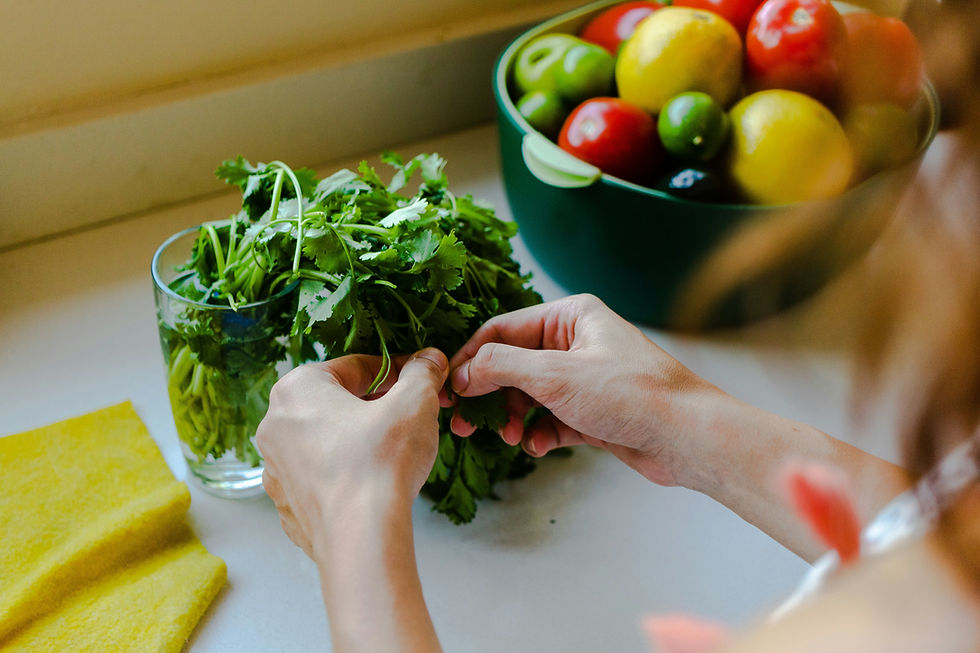
Coriander
Coriander is the most difficult pot herb to look after! Water little but often, if required, when the surface of the compost is dry to the touch. As Coriander is a natural rosette forming plant, it tends to collapse when taken out of its sleeve.

How to look after cut herbs
Simply place the cut herbs in their bag in the salad drawer of the refrigerator. Alternatively, for most stalky herbs like thyme and parsley, treat like a cut flower. Cut 2cm off the bottom of the stalks and place in a cup of water in the refrigerator.
Basil is the exception! Do not refrigerate, as the chill will quickly turn the leaves black. Simply store in its bag in a cool dark place, or cut 2cm off the stems and place in a cup of water positioned out of direct sunlight.
Garden Pots
Planting herbs in the garden offers many opportunities to either visually enhance or provide a range of ready to cut culinary herbs, or both.
Originally found growing wild in forests, on mountainsides and in hedgerows around the world, herbs continue to attract attention not only for their culinary values, but their fantastic visual appearance.
Careful plant selection and hybridisation now offers the gardener the chance to purchase from garden centres and specialist nurseries a wide selection of herbs which offer colourful flowers, many foliage types and fantastic scents. A carefully selected range of plants can add new and exciting features to your shrubberies, borders, rockeries, tubs, window boxes or hanging baskets.
Purpose built herb gardens can be found in monasteries, country houses and formal gardens throughout the World. Whether planted for culinary use or for the visual / aroma features, herb plants remain a mainstay of the British garden. Garden herb producers in Britain produce some of the most fantastic varieties.


Essential Oils
The flavour and aroma of herbs is provided by the essential oils that are found in the leaves, flowers, bark, roots or seeds of the plant. Essential oils are complex mixtures of aromatic substances that give the unique characteristic of each herb and are found in special cells in the plant called trichomes.
Almost all herbs can be grown for the production of essential oils but the yield of oil from each species dictates whether this is commercially viable.
England has historically been most famous for the production of lavender and peppermint oils and in the southeast of England both oils have been grown commercially since the 18th Century. Lavender it is now thriving there once again on the warm south facing limestone slopes in Kent, and it is also grown commercially in Jersey, Norfolk and on the Cotswold Hills. The Romans prized lavender oil for its fragrance and antiseptic properties but it was probably not introduced into the UK from the Mediterranean region until the 16 th century.
Today most peppermint and spearmint is grown in parts of the southeast of England. Fields of Angelica, Chamomile, Coriander, Rosemary, Sage, Thyme and Lemon Balm for the production of Essential oils use can also be found scattered across the southern half of England.
Essential oils are utilised in aromatherapy, perfumes and cosmetic products, as well as for therapeutic and culinary purposes.

Herb Facts
Ancient records reveal recipes for herb infused oils and creams in the tombs of legendary beauties such as Cleopatra
Herb Facts
Parsley is a natural breath freshener, particularly in combating the potency of garlic
Herb Facts
Dill was once an important herb in witchcraft, and a purported aphrodisiac, it has a distinctive sour flavour that makes an interesting and sometimes unexpected statement in cooking. The leaves, seeds and flowers of the plant can all be used
Herb Facts
The Egyptians studied herbs and used them in religious functions as far back as 3500 B.C. The Chinese began the organised study of herbs in 2500 B.C. Written records in China have survived enumerating the uses of herbs that date from 100 B.C.
Herb Facts
The discovery of America is linked to Western civilisation’s search for easier access to rare spices and herbs. Columbus was, in fact, hoping to open trade routes for these substances when he blundered into the West Indies and the Age of Exploration unveiled the New World
Herb Facts
Herbal seeds have been found in pre-historic cave dwellings dating back as far as 500,000 years ago. Our ancestors have always used herbs in cooking and health remedies
Herb Facts
Today we use the majority of the traditional ‘strewing’ herbs to make scented sachets to deter moths, for pot pourri to sweeten the room and a variety of other aromatic uses
Herb Facts
A Royal Herb-Strewer was a popular profession in England in the days before proper drainage and medicines were the norm. Back then, herbs were used for their deodorising and healing properties. A herb strewer’s primary duty was to distribute herbs and flowers throughout the royal apartments in order to mask the rather unpleasant aromas of the city
Herb Facts
Dill is effective for the treatment of colic, gas and indigestion
Herb Facts
Chives have a beneficial effect on the circulatory system, lowering blood pressure
Herb Facts
Fresh herbs aid the digestion of food – especially fat - and help with the elimination of toxins from the body
Herb Facts
Mint leaves or oil deters ants and so a few scattered leaves in your cupboards can prove a useful, natural solution
Herb Facts
Growing a pot of basil in the kitchen may smell good to us but it doesn’t to nuisance flies and mosquitoes who are repelled by the aroma
Herb Facts
The Romans believed that the consumption of mint would increase their intelligence and the smell of mint in their houses was also a symbol of hospitality
Herb Facts
Rosemary is rich in antioxidants which help to maintain vitality & slow the ageing process
Herb Facts
Fresh herbs contain more antioxidants – substances that fight cancer and heart disease – than some fruit and vegetables
Hints and Tips
There are many ways to look after fresh herbs, depending on variety and whether they are pre-cut or living. You will find care notes on the back of packaging but here are some useful hints to make sure you get the most out of them.
Freezing herbs - any left over herbs can be frozen. Wash and gently shake dry. Place in a labelled bag and place in the drawer in the freezer. Best used within a month. To use, crush the bag and sprinkle into curries and stews. This will add flavour but will not be as good as using fresh herbs! Lemon grass stalks can be stored in the freezer for up to a month, and chopped whilst still frozen. Chopped mint can be frozen in ice cubes for cold summer drinks.
Drying herbs - robust herbs such as oregano, thyme, sage, mint & rosemary respond well to drying, but they will lose some of their depth of flavour.
Rinse herbs with cold water, and gently pat dry with kitchen paper.
Carrot family – Coriander, Curly Parsley, Flat leaf Parsley, Dill. For pot herbs, the new leaves are produced at the base, so harvest just above this point to allow the new growth to grow on. Use both the leaves and stalks.
Mint family – Basil, Greek Basil, Mint, Oregano, Rosemary, Sage, Thyme, Lemon Thyme. For pot herbs, pinch off sprigs above a side shoot. Use the sprigs whole or strip the leaves off the stem and chop. With Basil, pinch leaves off the stem and tear, rather than chopping with a metal knife, as this will stop the cut edge turning black. With small leaved Greek basil, pick off small sprigs rather than individual leaves.
Onion family - Chive. Use scissors to snip off leaves and prepare, rather than cutting with a knife.
Daisy family – Tarragon. Use the sprigs whole or strip the leaves off the stem and chop.
Grass family – Lemon grass. To use stalks whole, bash with the side of a knife to release the flavour. Alternatively, remove a few of the tough outer leaf sheaths and finely slice.